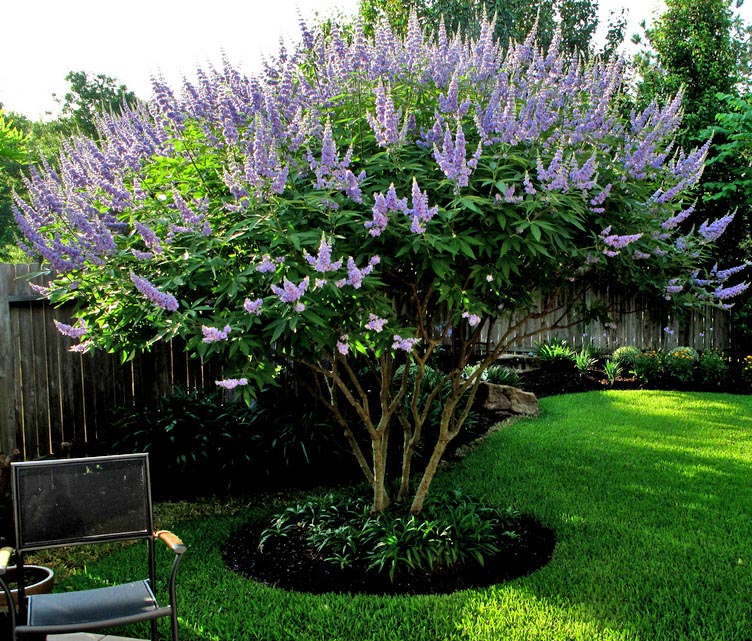
Vitex agnus-castus. Agnus  castus  Chaste tree   Family: Verbenaceae    
PART USED: Ripe berries
ACTIONS
GROUP: The Endocrine and Reproductive- Hormone Regulators
1. Female hormone balancer.
2. Sexual tonic.
INDICATIONS
1. Pre-menstrual tension. Menopausal hormone imbalance.
PREPARATIONS
Fluid extract 1:1 in 45% alcohol[3] 0.5-1 ml.[1]
Tincture  (S)  10 drop doses have proven beneficial.[1]
NOTE- Adjust dosage to suit, but do not exceed l ml.[1]


References
Inner Path can not take any responsibility for any adverse effects from the use of plants. Always seek advice from a professional before using a plant medicinally.

Constituents
Flavonoid- casticin.
Glycosides- agnuside and aucubin.
Volatile oil.

Research

Chaste tree (Vitex agnus-castus)--pharmacology and clinical indications.
Wuttke W, Jarry H, Christoffel V, Spengler B, Seidlová-Wuttke D.
Abstract
Extracts of the fruits of chaste tree (Vitex agnus castus = AC) are widely used to treat premenstrual symptoms. Double-blind placebo-controlled studies indicate that one of the most common premenstrual symptoms, i.e. premenstrual mastodynia (mastalgia) is beneficially influenced by an AC extract. In addition, numerous less rigidly controlled studies indicate that AC extracts have also beneficial effects on other psychic and somatic symptoms of the PMS. Premenstrual mastodynia is most likely due to a latent hyperprolactinemia, i.e. patients release more than physiologic amounts of prolactin in response to stressful situations and during deep sleep phases which appear to stimulate the mammary gland. Premenstrually this unphysiological prolactin release is so high that the serum prolactin levels often approach heights which are misinterpreted as prolactinomas. Since AC extracts were shown to have beneficial effects on premenstrual mastodynia serum prolactin levels in such patients were also studied in one double-blind, placebo-controlled clinical study. Serum prolactin levels were indeed reduced in the patients treated with the extract. The search for the prolactin-suppressive principle(s) yielded a number of compounds with dopaminergic properties: they bound to recombinant DA2-receptor protein and suppressed prolactin release from cultivated lactotrophs as well as in animal experiments. The search for the chemical identity of the dopaminergic compounds resulted in isolation of a number of diterpenes of which some clerodadienols were most important for the prolactin-suppressive effects. They were almost identical in their prolactin-suppressive properties than dopamine itself. Hence, it is concluded that dopaminergic compounds present in Vitex agnus castus are clinically the important compounds which improve premenstrual mastodynia and possibly also other symptoms of the premenstrual syndrome.
PMID: 12809367 DOI: 10.1078/094471103322004866  Phytomedicine. 2003 May;10(4):348-57. ncbi.nlm.nih.gov |

Therapeutic effect of Vitex agnus castus in patients with premenstrual syndrome.
Zamani M, Neghab N, Torabian S.
Abstract
Medical therapies have been widely used for premenstrual syndrome (PMS), but in all of them side effects are predominant. Herbal remedies rarely have side effects and people have more tendencies toward them than chemical therapies. In this study the therapeutic effect of Vitex agnus castus on women who had the PMS, in comparison with placebo, were investigated. In this randomized, placebo-controlled, double-blind study, from 134 selected patients 128 women suffered from PMS were evaluated (active 62, placebo 66). All patients answered to a self assessment questionnaire about their headache, anger, irritability, depression, breast fullness and bloating and tympani during the premenstrual period before the study. Forty drops of Vitex agnus extract or matching placebo, administrated for 6 days before menses for 6 consecutive cycles. Patients answered the self-assessment questionnaires after 6 menstrual cycles, again. Each item rated using a visual analogue scale (VAS). The mean age was 30.77 (SD=4.37) years in the active group and 30.89 (SD=4.02) years in the placebo group.Rank of variables had significantly difference in active and placebo group before and after the study (P<0.0001) also we noticed significant differences on the use of Vitex agnus in comparison with placebo (P<0.0001). Vitex agnus can be considered as an effective and well tolerated treatment for the relief of symptoms of mild and moderate PMS.
PMID: 22359078  Acta Med Iran. 2012;50(2):101-6. ncbi.nlm.nih.gov