Curcuma zedoaria.  莪 术 É  shù  Zodoaria    
Similar to turmeric.
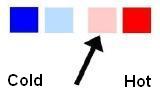
Nature: Warm     FLAVOR: Bitter, pungent, acrid    CHANNELS: Liver, Spleen
FUNCTIONS
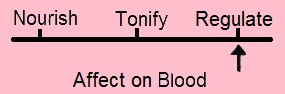
GROUP: Regulate Blood and removing Stasis- strongly
1. Regulate Blood.
2. Promote Qi flow, break up coagulation, eliminate accumulation, relieve pain.[1]
INDICATIONS-
1. Commonly used to clear Blood stasis and Energy stasis: Abdominal lumps, abdominal swelling and pain due to accumulation, blood coagulation causing suppression of menses.[1] Qi stasis is hard and moving a little. Blood stasis is hard and stuck.[4] Amenorhea for a few months with pain on pressure P- wiry and hard and obstruction in lower abdomen.[4]
2. Blood stasis due to Qi obstruction: hard lumps, especially pain in chest abdomen and under ribs.[4]
3. Indigestion due to food accumulation in Stomach: bloating, borborygmus, fullness and pain in abdomen.[4]
4. Use in oncology to stop growth of tumours including fibroids.[2]
5. Fall injuries.[1]
CONTRAINDICATIONS: Pregnancy, excess menstruation, don't overuse.[4]
PATENT COMBINATIONS
COMPARISONS: Jiang huang, Yu jin and E shu
All three eliminate Blood stasis and promote flow of Qi
Jiang huang stimulates menstrual discharge, and relieve pain.
Yu jin also calms the nerves and ease the mind, and increase the flow of bile.
E shu promotes the flow of qi and eliminate blood stasis with powerful effect, and to relieve pain by removing the stagnation of undigested food.[3]
PREPARATIONS: Dry rhizome 4-9 g.[1] 3-6 g.[4]

References
Inner Path can not take any responsibility for any adverse effects from the use of plants. Always seek advice from a professional before using a plant medicinally.

Constituents.

Research.
The rhizome is used to treat certain types of tumour in China nad has shown cytotoxicity in some systems.[1]
References
[1] Matthes, H.W.D. et al. (1980) Phytochem. 19, 2643

Effect of Curcuma zedoaria Rosc root extracts on behavioral and radiology changes in arthritic rats
Madan L. Kaushik and Sunil S. Jalalpure
Abstract
The present study was conducted to evaluate the effects of petroleum ether, chloroform, and methanol root extracts of Curcuma zedoaria Rosc (Family: Zingiberaceae) on behavioral and radiology aspects of Freund's Complete Adjuvant (FCA)-induced monoarthritis in left ankle joint of rats using open-field test. Traditionally, Curcuma zedoaria root has been used as anti-inflammatory and antiarthritic drug. Behavioral aspects include latency time to explore, ambulatory, rearing, grooming, urination, and defecation. Animals were divided into ten groups each of six rats, all the animals were subjected to open-field test before the induction of arthritis at 0 day and thereafter 3, 7, 14 21, 28, 35, and 42 days of postinoculation FCA injection. The rat was placed in an open field and observed all behavioral aspects for 5  minutes and radiography analysis was made on day 42. Selected doses were 10 mg/kg.i.p. Indomethacin 200 mg/kg.p.o. marketed herbal drug Rumalaya forte and 200 and 400 mg/kg.p.o. of each extracts, respectively. The results showed significant decrease in ambulation and rearing; however, increase in latency time to explore and grooming, urination, and defecation in control group, but in contrast, drug-treated groups showed significant recovery in all behavioral aspects except methanol groups. On the basis of radiography examination, control and methanol groups showed highest swelling compared with normal group; however, all drug-treated groups showed significant reduced swelling. Treatments with petroleum ether and chloroform extracts recovery were observed in behavioral and radiological aspects in arthritic rats.
J Adv Pharm Technol Res. 2011 Jul-Sep; 2(3): 170–176.
doi: 10.4103/2231-4040.85537
PMCID: PMC3217705 PMID: 22171314 ncbi.nlm.nih.gov

Anti-inflammatory sesquiterpenes from Curcuma zedoaria.
Makabe H, Maru N, Kuwabara A, Kamo T, Hirota M.
Abstract
From the methanolic extract of the rhizome of Curcuma zedoaria, we isolated anti-inflammatory sesquiterpene furanodiene (1) and furanodienone (2) along with new sesquiterpene compound 3 and known eight sesquiterpenes, zederone (4), curzerenone (5), curzeone (6), germacrone (7), 13-hydroxygermacrone (8), dehydrocurdione (9), curcumenone (10), and zedoaronediol (11). Their structures were elucidated on the basis of spectroscopic data. The anti-inflammatory effect of isolated components on 12-O-tetradecanoylphorbol-13-acetate (TPA)-induced inflammation of mouse ears were examined. Compounds 1 and 2 suppressed the TPA-induced inflammation of mouse ears by 75% and 53%, respectively, at a dose of 1.0 micromol. Their activities are comparable to that of indomethacin, the normally used anti-inflammatory agent.
PMID: 16901812 DOI: 10.1080/14786410500462900 Nat Prod Res. 2006 Jun;20(7):680-5. ncbi.nlm.nih.gov

Extracts from Curcuma zedoaria Inhibit Proliferation of Human Breast Cancer Cell MDA-MB-231 In Vitro.
Gao XF, Li QL, Li HL, Zhang HY, Su JY, Wang B, Liu P, Zhang AQ.
Abstract
OBJECTIVE:
To evaluate the effect of petroleum ether extracts of Curcuma zedoaria on the proliferation of human triple negative breast cancer cell line MDA-MB-231.
METHODS:
The reagents were isolated from Curcuma zedoaria by petroleum ether fraction. It was assayed by CCK8 for MDA-MB-231 cellular viability with various concentrations and days, cell cycle analyses, Western Blot analysis, and Realtime Reverse Transcriptase PCR analyses for chemokines molecules including E-cadherin, and E-selectin, and adhesion molecules including CCR7, SLC, SDF-1, and CXCR4. Epirubicin was used as control in the study.
RESULTS:
MDA-MB-231 cells were inhibited by petroleum ether extracts of Curcuma zedoaria (P < 0.05), and the inhibition rate was dependent on concentrations and time. Petroleum ether extracts of Curcuma zedoaria as well as Epirubicin produce a significant G0/G1 cell cycle arrest. The level of expression of proteins E-cadherin and E-cadherin mRNA was significantly increased, while proteins SDF-1, CCR7, and CXCR4 mRNA were decreased after being incubated with petroleum ether extracts of Curcuma zedoaria at the concentrations of 300 μ g/mL than control (P < 0.05). The differences were that the protein CXCR4 mRNA expression level was higher than vehicle.
CONCLUSIONS:
MDA-MB-231 cells were inhibited by petroleum ether extracts of Curcuma zedoaria.
PMID: 24883070 PMCID: PMC4026840 DOI: 10.1155/2014/730678
Evid Based Complement Alternat Med. 2014;2014:730678. doi: 10.1155/2014/730678. Epub 2014 May 5. ncbi.nlm.nih.gov

Cytotoxic Activity from Curcuma zedoaria Through Mitochondrial Activation on Ovarian Cancer Cells
Yujin Shin and Yongkyu Leecorresponding author
Abstract
α-Curcumene is one of the physiologically active components of Curcuma zedoaria, which is believed to perform anti-tumor activities, the mechanisms of which are poorly understood. In the present study, we investigated the mechanism of the apoptotic effect of α-curcumene on the growth of human overian cancer, SiHa cells. Upon treatment with α-curcumene, cell viability of SiHa cells was inhibited > 73% for 48 h incubation. α-Curcumene treatment showed a characteristic nucleosomal DNA fragmentation pattern and the percentage of sub-diploid cells was increased in a concentration-dependent manner, hallmark features of apoptosis. Mitochondrial cytochrome c activation and an in vitro caspase-3 activity assay demonstrated that the activation of caspases accompanies the apoptotic effect of α-curcumene, which mediates cell death. These results suggest that the apoptotic effect of α-curcumene on SiHa cells may converge caspase-3 activation through the release of mitochondrial cytochrome c.
Toxicol Res. 2013 Dec 31; 29(4): 257–261.
doi: 10.5487/TR.2013.29.4.257
PMCID: PMC3936178 PMID: 24578796 ncbi.nlm.nih.gov

Evaluation of antinociceptive, in-vivo & in-vitro anti-inflammatory activity of ethanolic extract of Curcuma zedoaria rhizome

H M Arif Ullah, Sayera Zaman, Fatematuj Juhara, Lucky Akter, Syed Mohammed Tareq, Emranul Haque Masum and Rajib BhattacharjeeEmail author
Abstract
Background
The present study was aimed to investigate the antinociceptive and anti-inflammatory activity of the Curcuma zedoaria (family Zingiberaceae) ethanolic rhizome extract in laboratory using both in vitro and in vivo methods so as to justify its traditional use in the above mentioned pathological conditions.
Methods
Phytochemical screening was done to find the presence of various secondary metabolites of the plant. In vivo antinociceptive activity was performed employing the hot plate method, acidic acid induced writhing test and formalin induced writhing test on Swiss albino mice at doses of 250 and 500 mg/kg body weight. Anti-inflammatory activity test was done on Long Evans rats at two different doses (250 and 500 mg/kg body weight) by using carrageenan induced paw edema test. Finally in vitro anti-inflammatory test by protein-denaturation method was followed. Data were analyzed by one-way analysis of variance (ANOVA) and Dunnett’s t-test was used as the test of significance. P value <0.05 was considered as the minimum level of significance.
Results
Phytochemical screening revealed presence of tannins, saponins, flavonoids, gums & carbohydrates, steroids, alkaloids, reducing sugars and terpenoids in the extract. In the hot plate method, the extract increased the reaction time of heat sensation significantly to 61.99% and 78.22% at the doses of 250 and 500 mg/kg BW respectively. In acetic acid induced writhing test, the percent inhibition of writhing response by the extract was 48.28% and 54.02% at 250 and 500 mg/kg doses respectively (p < 0.001). The extract also significantly inhibited the licking response in both the early phase (64.49%, p < 0.01) and the late phase (62.37%, p < 0.01) in formalin induced writhing test. The extract significantly (p < 0.05, p < 0.01 and p < 0.001) inhibited carrageenan induced inflammatory response in rats in a dose related manner. In in-vitro anti-inflammatory test, the extract significantly inhibited protein denaturation of 77.15, 64.43, 53.04, 36.78 and 23.70% for doses of 500, 400, 300, 200 and 100 μg/mL respectively.
Conclusions
The results obtained from the tests indicate that the plant might have one or more secondary metabolite(s) having central and peripheral analgesic and anti-inflammatory activity.
BMC Complementary and Alternative MedicineThe official journal of the International Society for Complementary Medicine Research (ISCMR)201414:346
https://doi.org/10.1186/1472-6882-14-346© Ullah et al.; licensee BioMed Central Ltd. 2014
bmccomplementalternmed.biomedcentral.com

Evaluation of Anti-Inflammatory Effect of Ethanolic And Aqueous extracts of Curcuma Zedoaria Rosc Root
Madan L. Kaushik*, Sunil S. Jalalpure
Abstract
The present study investigates the antiinflammatory activity of ethanolic and aqueous extracts of Curcuma zedoaria Rosc roots in albino rats by using Carrageenan and Histamine induced hind paw edema method. The medicinal values of Curcuma zedoaria root have been mentioned in ancient literature as useful in disorders of inflammation. Dried pulverized root of Curcuma zedoaria was extracted with ethanol by using soxhlet apparatus and aqueous extract was prepared by cold maceration. The paw edema was induced by subplantar injection of above inflammagens and oedema volume was recorded using a Plethysmometer. Ethanol 200 and 400 mg/kg root extracts showed significant p<0.001 anti-inflammatory activity on 2nd to 6th hours and aqueous root extract showed non-significant antiinflammatory activity when compared with control group using standard groups (Indomethacin 10 mg/kg.i.p and Rumalaya forte 200 mg/kg p.o). It concludes that ethanolic root extract of Curcuma zedoaria Rosc augments that it shows good antiinflammatory activity against carrageenan and histamine induced paw edema in rats.
Citation: Madan L. Kaushik, Sunil S. Jalalpure “Evaluation of Anti-Inflammatory effect of Ethanolic and Aqueous extracts of Curcuma zedoaria Rosc Root”, Int. J. Drug Dev. & Res., Jan-March 2011, 3(1):360-365.
drug-development